
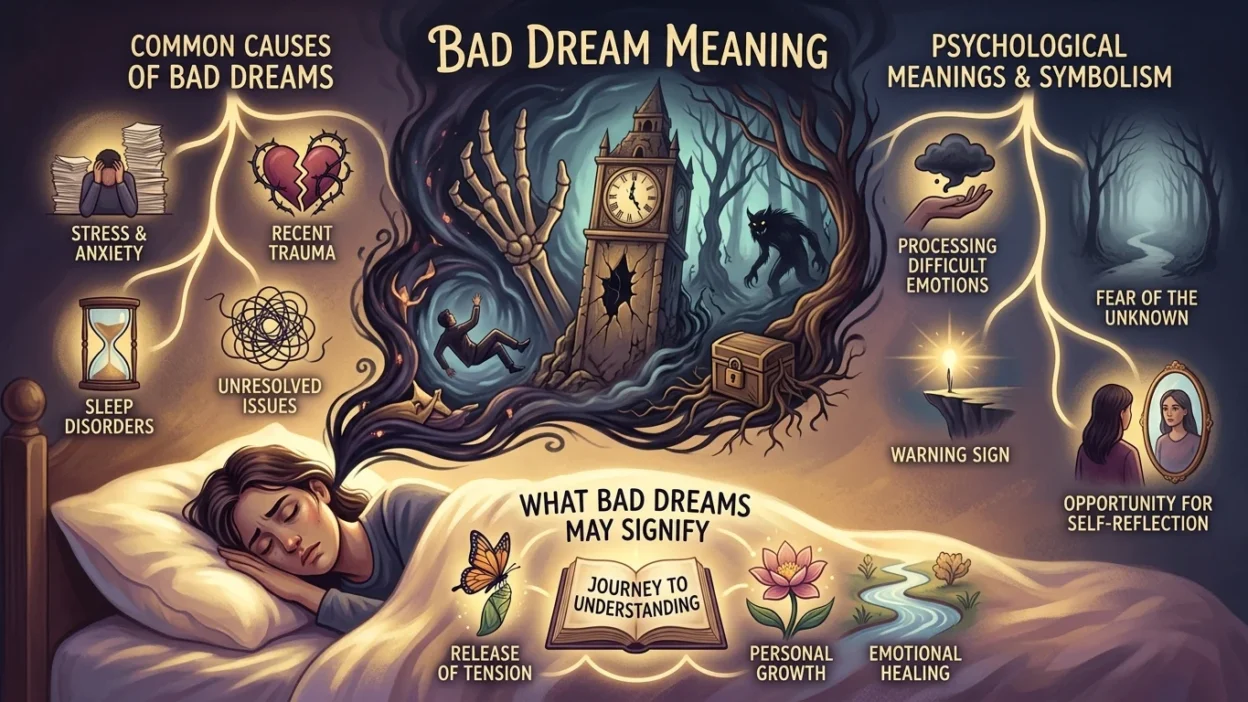
A bad dream can leave you feeling anxious, frightened, or emotionally drained long after you wake up.
if you dreamed about being chased, falling, losing a loved one, or facing a dangerous situation, these unsettling dreams often carry symbolic messages rather than literal predictions.
Understanding bad dream meaning can help you uncover hidden emotions, reduce anxiety, and better understand what your subconscious mind is trying to communicate.
Quick Answer: What Does a Bad Dream Mean?
Bad dream meaning often relates to stress, fear, unresolved emotions, personal struggles, or major life changes. Rather than predicting future events, bad dreams usually reflect your inner thoughts, worries, and emotional state. They may also encourage you to face problems you’ve been avoiding.
| Positive Meanings | Negative Meanings |
|---|---|
| Emotional healing | Anxiety and stress |
| Personal growth | Fear of failure |
| Increased self-awareness | Unresolved trauma |
| Warning to make better choices | Emotional overwhelm |
| Opportunity for change | Hidden insecurities |
What Is a Bad Dream?
A bad dream, sometimes called a nightmare, is a disturbing dream that creates feelings such as fear, sadness, anger, confusion, or helplessness. Most people experience bad dreams occasionally, especially during stressful periods of life.
Unlike ordinary dreams, bad dreams are emotionally intense and often wake the dreamer.
Symbolism of Bad Dreams
Bad dreams use symbols instead of direct messages. The frightening events often represent emotions rather than actual future events.
Common symbolic meanings include:
- Fear of losing control
- Emotional pain
- Hidden guilt
- Unfinished personal issues
- Fear of change
- Low confidence
- Relationship struggles
- Financial worries
- Health concerns
- Spiritual awakening
Every dream symbol should be interpreted alongside your personal experiences.
Spiritual Meaning of Bad Dreams
Spiritually, bad dreams are often viewed as opportunities for growth rather than signs of danger.
They may symbolize:
- A spiritual warning to pay attention
- Negative energy surrounding you
- The need to release emotional baggage
- Inner transformation
- A reminder to reconnect with your faith
- The beginning of spiritual healing
Many spiritual traditions believe that difficult dreams appear before important personal growth.
Psychological Meaning of Bad Dreams
From a psychological perspective, bad dreams help your brain process emotions.
They commonly occur during periods of:
- High stress
- Anxiety
- Depression
- Trauma recovery
- Relationship conflict
- Major life changes
Your subconscious uses dreams to organize memories and emotional experiences that may be difficult to handle during waking life.
Common Bad Dream Scenarios and Their Meanings
Dream About Being Chased
Being chased usually symbolizes avoiding a problem or responsibility. It may suggest you’re running from emotions or difficult decisions.
Dream About Falling
Falling often represents insecurity, loss of control, or fear of failure. It may reflect uncertainty about work, relationships, or personal goals.
Dream About Death
Dreaming of death rarely predicts actual death. Instead, it often symbolizes endings, transformation, and new beginnings.
Dream About Losing Teeth
This dream frequently represents anxiety, self-confidence issues, fear of aging, or communication difficulties.
Dream About Being Attacked
Being attacked may indicate emotional conflict, criticism, or internal struggles that need attention.
Dream About Natural Disasters
Earthquakes, floods, fires, or storms often represent overwhelming emotions and major life changes.
Dream About Being Lost
Feeling lost in a dream usually reflects uncertainty about your direction in life or confusion regarding important decisions.
Dream About Darkness
Darkness often symbolizes fear of the unknown, hidden emotions, or uncertainty about the future.
Dream About Failing an Exam
Even years after graduation, this common nightmare symbolizes pressure, self-doubt, or fear of being judged.
Dream About Missing a Flight or Train
Missing transportation often reflects fear of missed opportunities or concerns about falling behind in life.
Biblical Meaning of Bad Dreams
In the Bible, dreams can sometimes serve as warnings, guidance, or messages from God. However, not every bad dream has a divine meaning.
Biblical interpretations may include:
- A call to prayer
- Spiritual reflection
- Repentance
- Seeking wisdom
- Trusting God’s guidance during difficult times
Believers are encouraged to seek discernment rather than fear every disturbing dream.
Cultural Interpretations of Bad Dreams
Different cultures explain bad dreams differently.
Western Interpretation
Often connected to psychology, stress, and emotional health.
Eastern Interpretation
May emphasize karma, inner balance, and spiritual growth.
Indigenous Traditions
Some cultures believe dreams connect people with ancestors or spiritual guidance.
Islamic Perspective
Some bad dreams are viewed as disturbing dreams that should not cause fear. People are encouraged to seek God’s protection, avoid sharing distressing dreams unnecessarily, and focus on prayer and remembrance.
What Your Bad Dream May Be Telling You
A bad dream may be encouraging you to:
- Face unresolved emotions.
- Reduce stress.
- Heal from past experiences.
- Improve relationships.
- Change unhealthy habits.
- Set healthy boundaries.
- Take better care of yourself.
- Trust your intuition.
Instead of fearing nightmares, consider them invitations to better understand yourself.
Are Bad Dreams Always Negative?
Not at all.
Many bad dreams lead to positive outcomes because they reveal hidden issues before they become bigger problems.
Benefits of understanding bad dreams include:
- Better emotional awareness
- Personal growth
- Improved decision-making
- Reduced stress
- Increased resilience
- Greater self-understanding
Sometimes the most frightening dreams carry the most valuable lessons.
Factors That Can Cause Bad Dreams
Several everyday factors increase the likelihood of disturbing dreams:
- Stress
- Anxiety
- Poor sleep habits
- Certain medications
- Fever
- Trauma
- Alcohol use
- Emotional conflict
- Watching frightening content before bed
- Major life transitions
Addressing these factors can reduce nightmare frequency.
How to Interpret Your Bad Dream
Follow these simple steps:
- Write your dream down immediately after waking.
- Identify the strongest emotions you felt.
- Notice recurring symbols.
- Connect the dream to current life situations.
- Look for patterns across multiple dreams.
- Focus on the emotional message instead of literal events.
Dream journals often reveal themes that become clearer over time.
Tips for Reducing Bad Dreams
If nightmares happen often, try these strategies:
- Maintain a consistent sleep schedule.
- Practice relaxation before bedtime.
- Limit caffeine and alcohol in the evening.
- Reduce screen time before sleep.
- Keep a dream journal.
- Exercise regularly.
- Address ongoing stress through healthy coping methods.
- Seek professional support if nightmares are frequent, severe, or linked to trauma.
Frequently Asked Questions
What does a bad dream mean spiritually?
Spiritually, a bad dream often symbolizes emotional cleansing, personal growth, or a reminder to pay attention to your spiritual well-being.
Can bad dreams predict the future?
Most experts believe bad dreams reflect emotions, stress, and subconscious thoughts rather than predicting future events.
Why do I keep having the same bad dream?
Recurring bad dreams often indicate unresolved emotional issues or ongoing stress that your subconscious wants you to address.
Are nightmares normal?
Yes. Most people experience nightmares occasionally, especially during stressful periods.
Should I worry about bad dreams?
Occasional bad dreams are normal. However, frequent nightmares that disrupt sleep or daily life may benefit from discussion with a healthcare or mental health professional.
Can stress cause bad dreams?
Yes. Stress is one of the most common causes of nightmares because it increases emotional activity during sleep.
Final Thoughts
Bad dreams may feel frightening, but they are often meaningful reflections of your inner world rather than signs that something bad will happen.
By exploring the emotions, symbols, and situations within your nightmares, you can gain valuable insights into your fears, challenges, and opportunities for growth.
Instead of fearing bad dreams, view them as messages that encourage healing, self-awareness, and positive change.

Oliver James is a dedicated dream meanings writer and researcher at CodzDream. He explores dream symbols, interpretations, and subconscious messages, helping readers understand their dreams through clear, insightful, and engaging content.