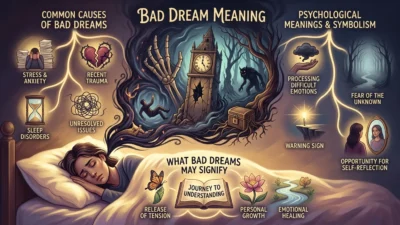

Dreams have fascinated people for thousands of years. Some dreams feel joyful and inspiring, while others leave you confused, frightened, or curious.
If you’ve ever wondered “What does my dream mean?“, you’re not alone.
Dream meaning explained simply means understanding the symbols, emotions, and events in your dreams to discover what your subconscious mind may be trying to communicate.
While dreams cannot predict the future with certainty, they often reflect your thoughts, emotions, fears, hopes, and personal experiences.
Dream Meaning Explained (Quick Answer)
Dream meaning is the interpretation of the symbols, people, places, and emotions that appear while you sleep. Most dreams represent your subconscious thoughts, emotional state, personal growth, or unresolved issues rather than literal future events.
What Is Dream Interpretation?
Dream interpretation is the process of finding possible meanings behind your dreams. Every dream contains symbols, emotions, and situations that can provide insight into your waking life.
Many experts believe dreams help your brain:
- Process daily experiences
- Organize memories
- Handle emotions
- Solve problems creatively
- Reduce emotional stress
Because everyone’s life experiences are different, the same dream can have different meanings for different people.
Why Do We Dream?
Scientists continue to study why humans dream, but several theories explain their purpose.
Some believe dreams help process emotions after stressful events. Others suggest dreams improve memory and learning. Spiritual traditions often view dreams as messages of guidance or self-discovery.
Most likely, dreams serve multiple purposes rather than having one single explanation.
Common Dream Symbols Explained
Many dreams include symbols that appear across cultures. These symbols usually represent emotions rather than literal events.
| Dream SymbolPossible Meaning | |
|---|---|
| Water | Emotions, healing, change |
| Flying | Freedom, confidence, success |
| Falling | Anxiety, loss of control |
| Teeth Falling Out | Insecurity, life changes, communication |
| Snake | Transformation, wisdom, fear, healing |
| Death | Endings, new beginnings, transformation |
| Baby | New opportunities, growth, fresh start |
| House | Your mind, personality, inner life |
| Car | Direction, control over your life |
| Money | Self-worth, opportunities, security |
Psychological Meaning of Dreams
From a psychological perspective, dreams are messages from your subconscious mind.
Your brain may use dreams to:
- Express hidden emotions
- Process trauma
- Practice difficult situations
- Reveal personal desires
- Reduce stress
Recurring dreams often point to unresolved emotional issues that need attention.
Spiritual Meaning of Dreams
Many spiritual traditions believe dreams carry symbolic messages rather than random images.
Spiritually, dreams may represent:
- Personal transformation
- Spiritual awakening
- Inner wisdom
- Divine guidance
- Emotional healing
- Life purpose
Rather than predicting exact future events, spiritual dreams often encourage self-reflection and growth.
Biblical Perspective on Dreams
The Bible includes many stories where dreams played important roles.
Examples include:
- Joseph interpreting Pharaoh’s dreams.
- Jacob’s ladder reaching heaven.
- Daniel explaining symbolic dreams.
- Joseph receiving guidance about protecting Jesus.
However, not every dream is considered a divine message. Many religious scholars encourage wisdom, prayer, and discernment when interpreting dreams.
Why Some Dreams Feel So Real
Realistic dreams often happen during REM sleep, when brain activity is very high.
These dreams may feel intense because:
- Emotions become stronger.
- The brain creates vivid images.
- Memories blend together.
- Stress increases dream intensity.
This is why you may remember certain dreams long after waking.
Why Do We Have Recurring Dreams?
Recurring dreams usually indicate that your subconscious is trying to draw attention to an unresolved issue.
Common reasons include:
- Ongoing stress
- Relationship problems
- Anxiety
- Fear of change
- Unfinished emotional healing
Understanding the emotions behind recurring dreams is often more valuable than focusing only on the dream’s symbols.
Positive vs. Negative Dream Meanings
| Positive Dreams | Negative Dreams |
|---|---|
| Personal growth | Emotional stress |
| New opportunities | Fear of failure |
| Healing | Anxiety |
| Confidence | Uncertainty |
| Success | Unresolved emotions |
| Inner peace | Need for self-reflection |
Even frightening dreams can have positive meanings by encouraging emotional healing and personal development.
Common Types of Dreams Explained
Flying Dreams
Flying often symbolizes freedom, confidence, ambition, or overcoming obstacles.
Falling Dreams
These dreams commonly represent insecurity, fear, or feeling out of control.
Being Chased
Being chased may suggest you’re avoiding a problem or emotion in your waking life.
Teeth Falling Out
One of the most common dreams worldwide, often connected to confidence, communication, or major life changes.
Water Dreams
Calm water may symbolize emotional balance, while stormy water often reflects emotional struggles.
Snake Dreams
Snakes frequently symbolize transformation, healing, hidden fears, or personal growth.
Death Dreams
Dreaming about death rarely predicts physical death. Instead, it usually represents endings and new beginnings.
How Your Emotions Affect Dream Meaning
The emotional feeling during a dream is often more important than the actual symbols.
Ask yourself:
- Were you happy?
- Afraid?
- Peaceful?
- Angry?
- Excited?
- Confused?
Your emotions provide valuable clues about what the dream represents.
Can Dreams Predict the Future?
There is no scientific evidence that ordinary dreams consistently predict future events.
However, some dreams may seem predictive because they reflect:
- Strong intuition
- Careful observation
- Emotional awareness
- Pattern recognition
Most experts recommend viewing dreams as symbolic rather than literal predictions.
How to Interpret Your Own Dreams
Follow these simple steps:
- Write your dream immediately after waking.
- Identify the strongest emotions.
- Notice repeating symbols.
- Think about current life situations.
- Look for personal connections.
- Focus on the overall message instead of every tiny detail.
Keeping a dream journal can help reveal patterns over time.
What Your Dream May Be Trying to Tell You
Dreams often encourage you to:
- Face hidden fears.
- Heal emotional wounds.
- Accept personal change.
- Improve relationships.
- Build confidence.
- Trust your intuition.
- Reduce stress.
- Explore personal growth.
Rather than giving exact answers, dreams usually invite self-reflection.
Tips for Remembering Dreams
If you rarely remember dreams, try these habits:
- Get enough sleep.
- Keep a notebook beside your bed.
- Write immediately after waking.
- Avoid checking your phone first.
- Practice mindfulness before sleeping.
- Maintain a consistent sleep schedule.
Frequently Asked Questions
What is the real meaning of dreams?
Dreams usually reflect your subconscious thoughts, emotions, memories, and personal experiences rather than predicting future events.
Are dreams messages from the subconscious?
Many psychologists believe dreams are one way your subconscious mind processes emotions, memories, and daily experiences.
Do recurring dreams have special meaning?
Yes. Recurring dreams often suggest unresolved emotions, ongoing stress, or important life issues that need attention.
Can the same dream have different meanings?
Absolutely. Dream meanings depend on your personal experiences, emotions, culture, beliefs, and current life circumstances.
Should every dream be interpreted literally?
No. Most dreams use symbolism instead of literal events. Understanding the emotional message is usually more helpful than taking dreams at face value.
Is dream interpretation scientifically proven?
While scientists agree that dreaming supports memory and emotional processing, there is no universal scientific method that assigns one fixed meaning to every dream symbol.
Final Thoughts
Understanding dream meaning explained is less about finding one perfect interpretation and more about exploring what your subconscious may be expressing. Dreams can reveal emotions, highlight personal challenges, inspire creativity, and encourage growth.
By paying attention to recurring themes, emotions, and symbols, you can gain valuable insights into yourself and your waking life.